We spend hours online every day. Scrolling through feeds, watching videos, reading comments, sharing opinions. The internet feels natural – almost like an extension of who we are. But here’s a question we don’t ask often enough: Are we really in control of what we see online – or is something else shaping it for us?
Safer Internet Day is not just about protecting our devices or setting strong passwords. It is about understanding the space we spend so much time in. It is about learning how information reaches us, why certain content appears on our screens, and how easily our opinions can be influenced without us even noticing.
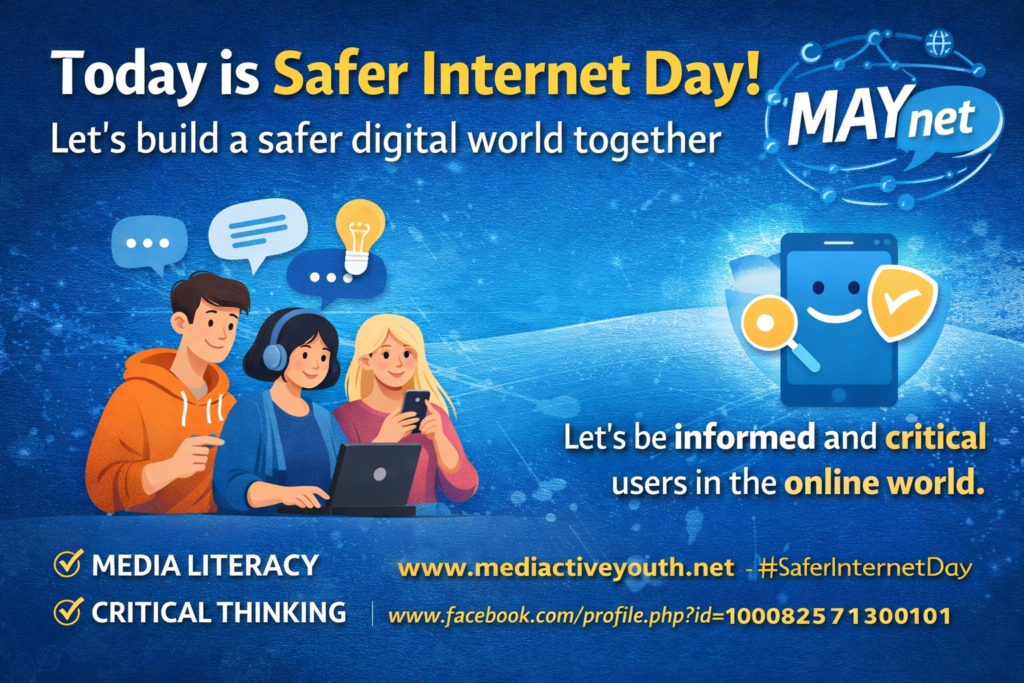
In today’s digital world, information travels faster than ever. A single post can reach thousands of people in minutes. A headline can go viral before anyone checks if it’s true. And sometimes, what spreads the fastest is not the most accurate – but the most emotional, shocking, or divisive. That’s where critical thinking comes in.
Being online is no longer just about consuming content. It is about interpreting it. Every post, every video, every article carries a message – sometimes clear, sometimes hidden. The ability to pause, reflect, and question what we see is what separates passive scrolling from active understanding. And this is becoming even more important with the rise of artificial intelligence. Today, images can be generated, voices can be cloned, and entire stories can be created in seconds. Content can look completely real – even when it isn’t. In such an environment, the line between truth and manipulation is becoming thinner. For young people, this creates both a challenge and an opportunity. We are among the most active internet users, but also the most powerful ones. We don’t just consume content – we shape it, share it, and amplify it.
Through initiatives like the MEDIActive Youth Network (MAYnet), young people across Europe are exploring what it really means to be media literate. Not just to recognise misinformation, but to understand the systems behind it. Not just to avoid being misled, but to actively contribute to a more informed and responsible digital space. Because the internet is not something separate from us.
It is something we are constantly building together.
Safer Internet Day reminds us that safety online is not only about technology. It is about awareness. About curiosity. About the courage to question. And maybe the most important thing to remember is this: being critical doesn’t mean being negative – it means being conscious. In a world full of information, that might be the most powerful skill we can have.
👉 Follow MAYnet and learn more:
🌐 https://www.mediactiveyouth.net
📘 https://www.facebook.com/profile.php?id=10008257130010