UNESCO’s Media and Information Literacy: A Multimedia Toolkit for Media, published in late 2025, is a comprehensive resource designed to help media organisations and media professionals integrate Media and Information Literacy (MIL) into their editorial practices, audience engagement strategies and organisational policies. Developed in response to growing challenges related to misinformation, disinformation, hate speech, online manipulation and the rapid development of artificial intelligence, the toolkit provides practical guidance for strengthening information integrity and public trust in media.
According to UNESCO, Media and Information Literacy empowers citizens by encouraging critical thinking, supporting freedom of expression and strengthening democratic participation. It helps people better understand how information is created, distributed and consumed, while enabling them to critically evaluate media content and make informed decisions.
The toolkit is intended for media organisations of all sizes and formats, including public, private, community, digital, broadcast and print media. It provides practical guidance, international case studies, expert insights, downloadable templates and audience engagement activities that can be adapted to different contexts. One of its key objectives is to help media organisations rebuild trust with audiences and strengthen the integrity of the information ecosystem.
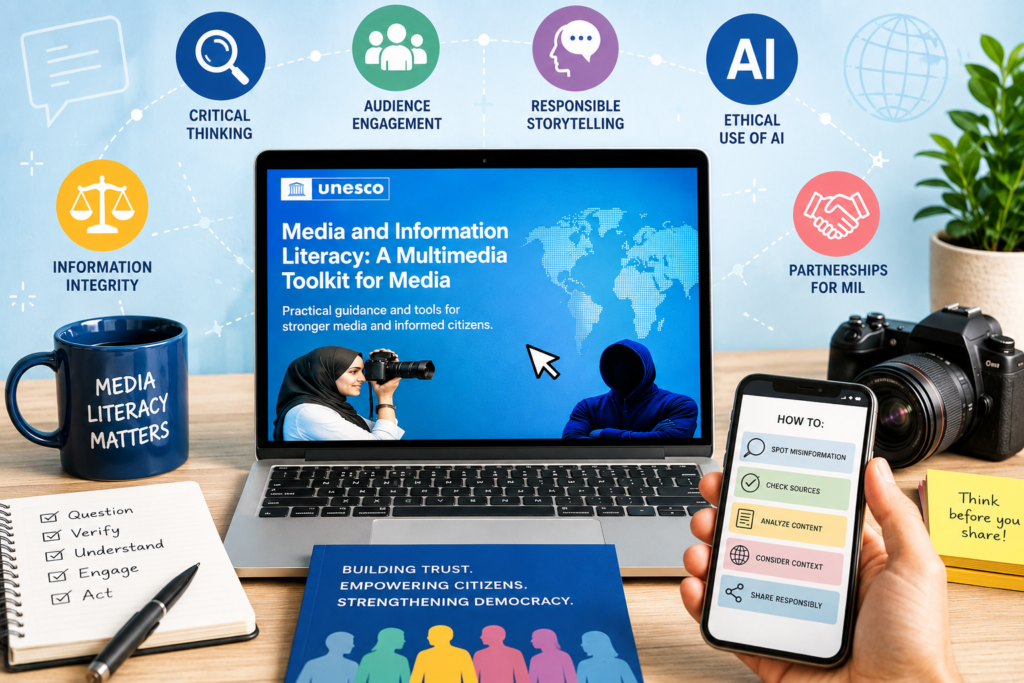
The resource is structured around nine key areas that media organisations can use to strengthen their commitment to Media and Information Literacy:
- Making MIL central to media operations
- Engaging audiences through MIL
- Integrating MIL into storytelling
- Promoting gender equality through MIL
- Embedding MIL in AI practices
- Committing to ongoing MIL training
- Building partnerships to disseminate MIL
- Strengthening the relationship between MIL and media regulation
- Monitoring and evaluating MIL strategies
Particularly relevant in today’s digital environment is the toolkit’s focus on artificial intelligence. UNESCO emphasises that MIL should provide an ethical foundation for AI-related practices in media and encourages organisations to develop transparent AI policies while helping audiences understand AI-generated content, deepfakes and emerging digital risks.
The toolkit also highlights the importance of collaboration. Through partnerships between media organisations, civil society, educational institutions and policymakers, Media and Information Literacy can reach wider audiences and contribute to healthier, more resilient information ecosystems. UNESCO further supports these efforts through initiatives such as the Global MIL Alliance and Global Media and Information Literacy Week.
For members of the MEDIActive Youth Network, as well as youth organisations, educators and civil society actors working in the field of media literacy, the toolkit represents a valuable source of inspiration and practical guidance. Its principles closely align with the values promoted through the Youth Media Literacy Declaration, particularly the emphasis on critical thinking, responsible use of digital technologies, media integrity and active democratic participation.
As media literacy continues to evolve in response to technological and societal changes, resources such as UNESCO’s Multimedia Toolkit for Media provide important support for organisations committed to empowering citizens – and especially young people – to navigate today’s complex information environment with confidence, responsibility and critical awareness.
Access the toolkit: https://www.unesco.org/mil4teachers/en/toolkit-media